
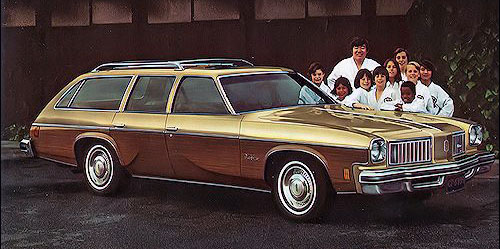
The year was 1975. And in America, we liked things BIG. Actually, I don’t know if we really thought about it much then. Maybe “big” was just default for us, and we didn’t truly grasp the context of size until things started getting small. Take our cars, for example – they were absolutely enormous. All that was about to change due to the oil crisis, but in ’75 we were still living the big time.
1975 was a pretty eventful year. The Vietnam War was finally over. The first blockbuster movie “Jaws” was released. Patty Hearst was arrested for armed robbery. The US and Soviet Union launched the joint Apollo-Soyuz mission. Saturday Night Live premiered on NBC. Jimmy Hoffa disappeared from the face of the Earth. And Pentax released its brand new K-Series cameras.

The K-Series was a big departure from Pentax’s previous offerings. All their SLRs from the previous couple of decades used the standard M42 screw-mount. It was a very popular mount, and there were tons of lenses out there from a wide variety of manufacturers. By the mid-70s, however, there were many camera manufacturer’s that had developed their own proprietary bayonet lens mount. And bayonet mounts would be the wave of the future – if for no other reason but the ease of changing lenses. If you’ve ever tried to change an M42-mount lens in a hurry, you know what I’m talking about. It takes a lot of unscrewing to take one off, and the same amount to put another one on. Bayonet-mount lenses only require about a quarter turn to install or remove. So it’s much less fiddly.
Pentax developed their K bayonet mount in collaboration with Zeiss in hopes that this mount would become the next standard (much like the previous M42 was). I think today we’d say that Pentax’s view on this was sorta open-source. And in truth, some manufacturers DID adopt the K-mount. But some of their main competitors were already using bayonet mounts designed a decade earlier. So it never really caught on as a world-standard. What it did open the door for was a fantastic lineage of cameras that are still sought-after. And to kick off this new branch of the Pentax family tree were three new cameras – the automatic KM, the manual KX, and the auto-exposure-capable flagship of the time – the K2.

I started this article off talking about things that were big. That’s a good way to describe most of the SLRs produced by any manufacturer in those days. And just like the cars, I don’t think we really knew how big they were until we saw small. And for that I believe we can safely assign ALL the blame to Olympus and the wonderful little SLR called the OM-1.
The Pentax K2 was about the same size as their previous Spotmatic series. Not huge at all, but big. It’s pretty well spec’d, too, although it had a couple of odd features that don’t make a ton of sense.
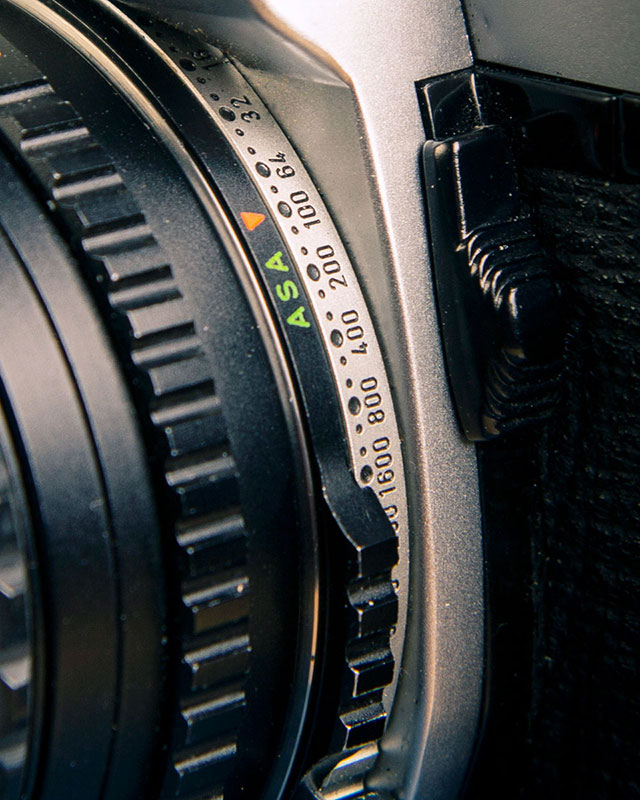
Setting the film speed, for example, requires turning a ring surrounding the lens mount. But it’s not really that intuitive, and I sometimes end up changing the exposure compensation (also on the same ring) instead. The K2’s sister, the KX, didn’t have this. The KX also featured a periscope window on the prism for displaying the set aperture in the viewfinder. This is conspicuously missing in the K2. I’m not sure I understand the design here, but it would seem that a “flagship” model would need a full-information viewfinder.
Still, to me the features the K2 does possess, outweighs what it doesn’t. The 5-blade titanium vertical shutter is capable of flash sync at 1/125. It’s capable of speeds from 1/1000 down to a full 8-seconds in aperture priority mode. And users who tended to shy away from electronically-controlled shutters at the time would be pleased to learn that in the case of a dead battery, shutter speeds from 1/125-1/1000 were still available. That’s actually pretty cool.

Some other notable features: a dual-metering turn-on system that provides either instant on-and-off metering by pressing the shutter release halfway, or permanent metering by pulling out the wind lever and pressing the release halfway.
Besides the lack of aperture info in the viewfinder, I have found the K2 to be a worthy flagship camera of the time. But it’s production was short-lived. The market’s desire for smaller cameras like the OM-1 led to the release of the Pentax MX and ME only a year later. The next true flagship for Pentax didn’t appear until the LX debuted in 1980.
If you’re in the market for a great K-mount camera body, I do recommend the K2. Most people think of the legendary K1000 as the one of the greatest SLRs that ever existed. And it is indeed a good camera. But you can get a much higher-spec’d K2 for about the same price these days.
Check out the video below for more info on the K2 and a photo shoot!
Specifications for the K2 are below. And following that is a small gallery of images taken with the camera. Happy shooting!
Technicals Specifications:
Original List Price (1975): $309.95
Price in 2020 Dollars: *$1499.51
Manufacturer: Asahi-Pentax
Model: K2
Year Introduced: 1975
Film Format: 35mm
Shutter: electronically-controlled, 5-blade Titanium vertical-travel
Self-timer: Yes
Shutter Speeds: 1/1000 to 8-secs plus B
Shutter Release: on top
Built-in Meter: Silicon-photo-diode ciruit. Center-weighted
Film Speed/ASA Range: 8-6400
Flash Sync: 1/125, Hot Shoe, X and FP PC-Terminal
Film Advance: Single-stroke lever on top
Frame Counter: Yes
Finder: 95% coverage, center micro-prism spot
Mirror: Instant-return
Other points of note: DOF preview, mirror lock-up
* Calculated using 2013dollars.com
Gallery of Pentax K2 Images / Film: Ultrafine Extreme 100









 Vintage Camera Digest
An excellent article, Steven! Thank you. I also enjoyed your recent K2 review and shoot on your YouTube channel. What lovely B&W photos you shared.
I still have my K2 mated to a rare, SMC 50mm f1.2 lens that I bought new back in 1975. As you wrote above, the K2 offers significantly more value than the base K1000 for close to the same price, and at times for a lower price on eBay.
Thank you for your inspiration to use film!
LikeLike
So glad you enjoyed it! That K2 is one of my faves! Cheers!
LikeLike