
1969
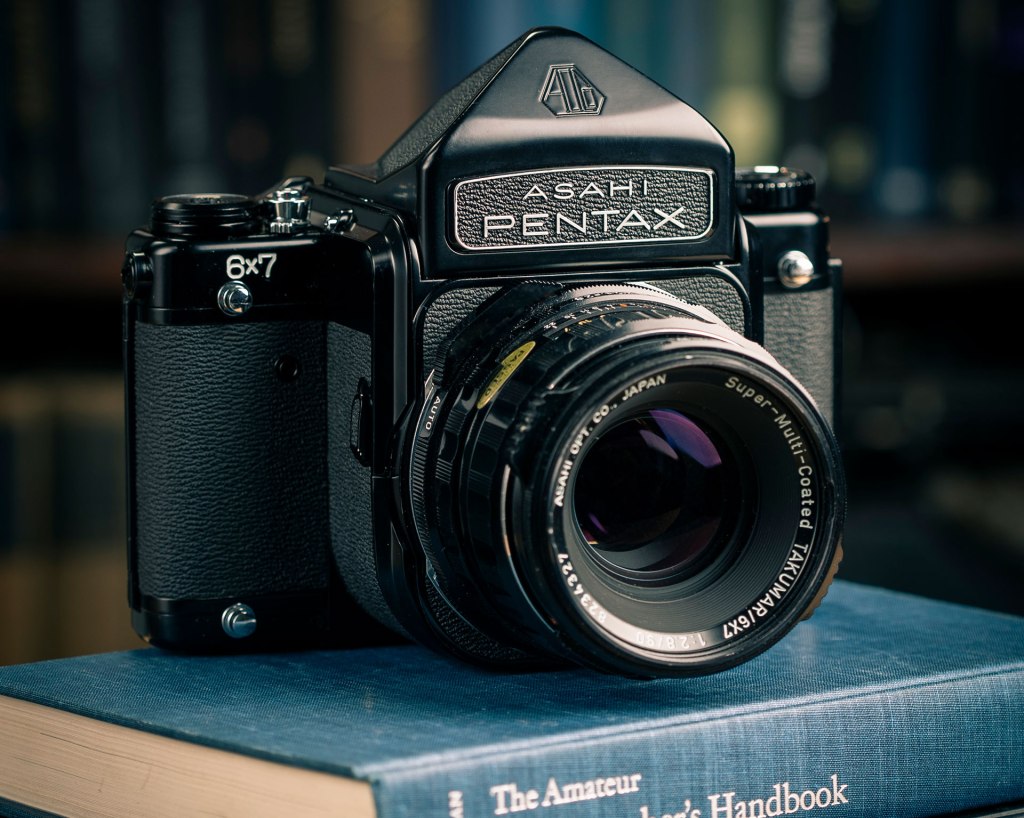
Not content to be constrained to the world of 35mm SLRs, Pentax upped their game in 1969 when they entered the medium-format market with the not-so-creatively-named “6×7” – the numbers simply referring to the size of the image it recorded on 120/220 film. Said to be the “ideal format” the width/height ratio of the 6x7cm fit perfectly to that of 8×10 enlargements, thereby eliminating the need to lose part of the image which occured when printing from square 6x6cm negatives.
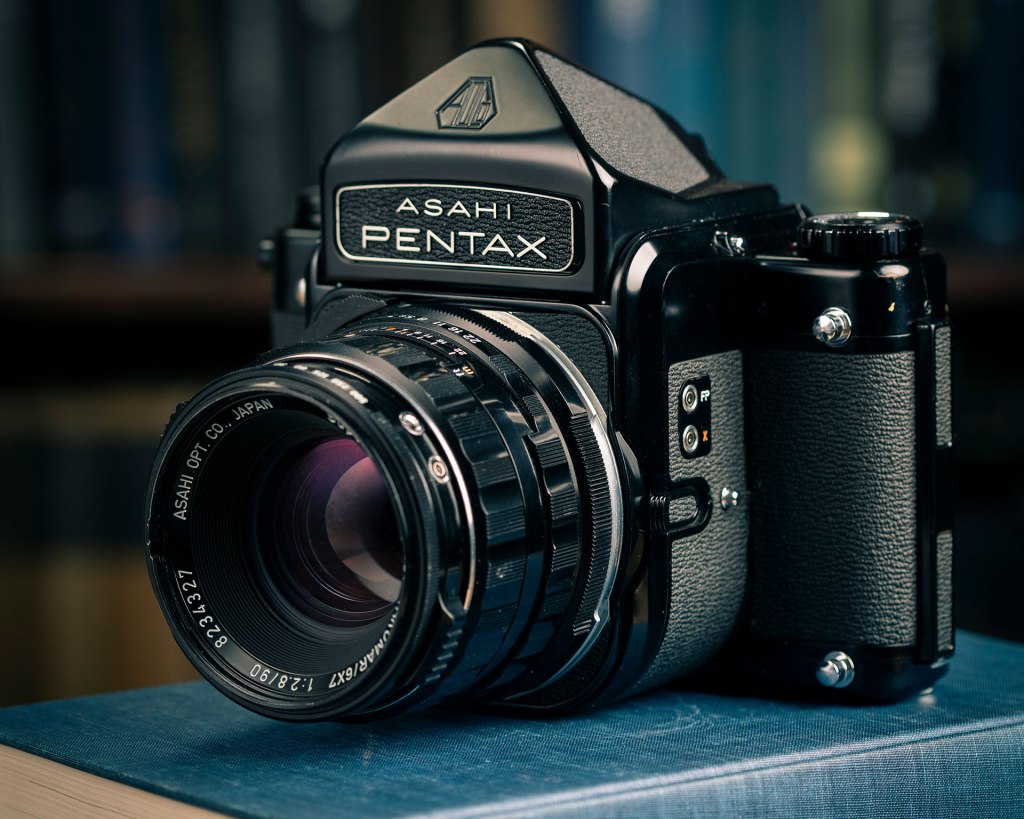
The Pentax 6×7 system was robust and included various finders and a respectable barrage of lenses. The camera was updated in 1976, increasing reliability and adding the mirror-lock-up feature. This was a significant improvement since the huge mirror could adversely affect the shooting stability of the camera as it moved out of the way during exposure.

The camera was further refined in 1989 and dropped the “x” between the “6” and “7”. And it underwent a complete redesign in 1998 to become the “Pentax 67II” – featuring all the latest technology (save for autofocus) of the time.
Even though the camera was released in 1969, I have found no actual published-for-sale price prior to 1973. A 1971 Honeywell advertisement included an address to request more info on the camera system since many dealers had yet to offer it for sale.
Pentax 6×7 System Sales Brochure (pdf)
Technicals Specifications:
Original List Price (1973): $769.30 w/105 2.4
Price in 2020 Dollars: $4489.33
Manufacturer: Asahi Pentax
Model: 6×7
Year Introduced: 1969
Film Format: 120/220
Lens: Pentax 67 bayonet mount
Shutter: Cloth, horizontal-travel, focal plane / leaf-shutter lenses also available
Self-timer:
Shutter Speeds: 1″ – 1/1000, B
Shutter Release: on top
Built-in Meter: w/ Meter prism option
Film Speed/ASA Range:
Flash Sync: 1/30, X and FP PC-terminals, no hot-shoe
Film Advance: Crank on top
Frame Counter: yes
Exposure Modes:Manual
Double-exposure capable:
Finder: Pentaprism or waist-level
Focusing Screens:
Mirror: Instant-return
Battery: 4LR44/PX28
Other points of note: Shutter is electronically-timed and requires a battery to work at all.
Important: Shutter will not fire unless the camera is loaded with film. Unless you are aware of this, it may cause you to believe that the camera is faulty. However, there are ways to trick it into thinking it’s loaded.
*Based on current information at
in2013dollars.com
All text and photographs on this website (other than found-photography and otherwise noted) are © 2014-2021 Steven Broome. All rights reserved.
 Vintage Camera Digest