

Argus Cameras, Inc. actually began in 1931 as the International Radio Corporation in Ann Arbor, Michigan. Begun by a group of businessmen who were dedicated to creating new jobs during the Great Depression, this company built radios using Bakelite instead of wood, thereby reducing the costs. Soon they were looking for new products to offer and settled on cameras – also using Bakelite in their construction.
Their first camera – the 1936 Model A – used the “new” Kodak 135 film cartridge and was quite a success. It’s been claimed that this camera was instrumental in introducing Americans to the small 135 format.
They soon dropped production of radios and focused on cameras and photographic goods – changing their name to International Research Corporation. In 1940 they began work for the U.S. war effort, and by 1949 changed their name again – this time to Argus Camera, Inc.
After the war and returning to civilian manufacturing, their success in the following decade was so great that they became the #2 photographic manufacturer and distributor in the U.S. behind Kodak. Competition from Japanese camera manufacturers was fierce, though, and the company found it couldn’t compete. And by the late 1960s, all U.S. camera production ceased.
It should be noted that the Argus C-series – or “the Brick” – was hugely successful. Argus was able to sell them at a very reasonable price due to the Bakelite construction. Their C-3 is one of the best-selling U.S. 35mm cameras of all time, of which over two-million units were produced up through the mid-60s. And you can find them for sale all over the place now.
| Argus Publications |
| Argus C-3 Manual |
| Argus C-3 Accessory Lenses |
Unbeknownst to many, the C-1, -2 and -3 cameras are actually interchangeable-lens cameras. These Sandmar-branded lenses included a 35mm f/4.5 and a 100mm f/4.5 and were manufactured by Enna Werk in Germany. Changing the lenses is a bit fiddly, and you have to make sure you line up the distance scale on the rangefinder just right.
The C-4 was a brand new design that reflected the contemporary look of cameras at the time. Some of the C-4s were modified by Geiss to accept interchangeable lenses. Apparently this proved popular enough for Argus to produce the C-44 for which they provided additional lenses. A Cintagon 35mm f/4.5 and a 100mm f/3.5 were produced by Steinheil Munchen in Germany. An interesting note on functionality: the 100mm was able to focus as close as 3.5 feet – the same as the normal and wide angle.
The C-44r was an update to the C-44 that included a plastic chrome advance lever and rewind crank. Also included was a connection point next to the shutter speed selector where one could attach a coupled light meter.
Argus cameras in my collection
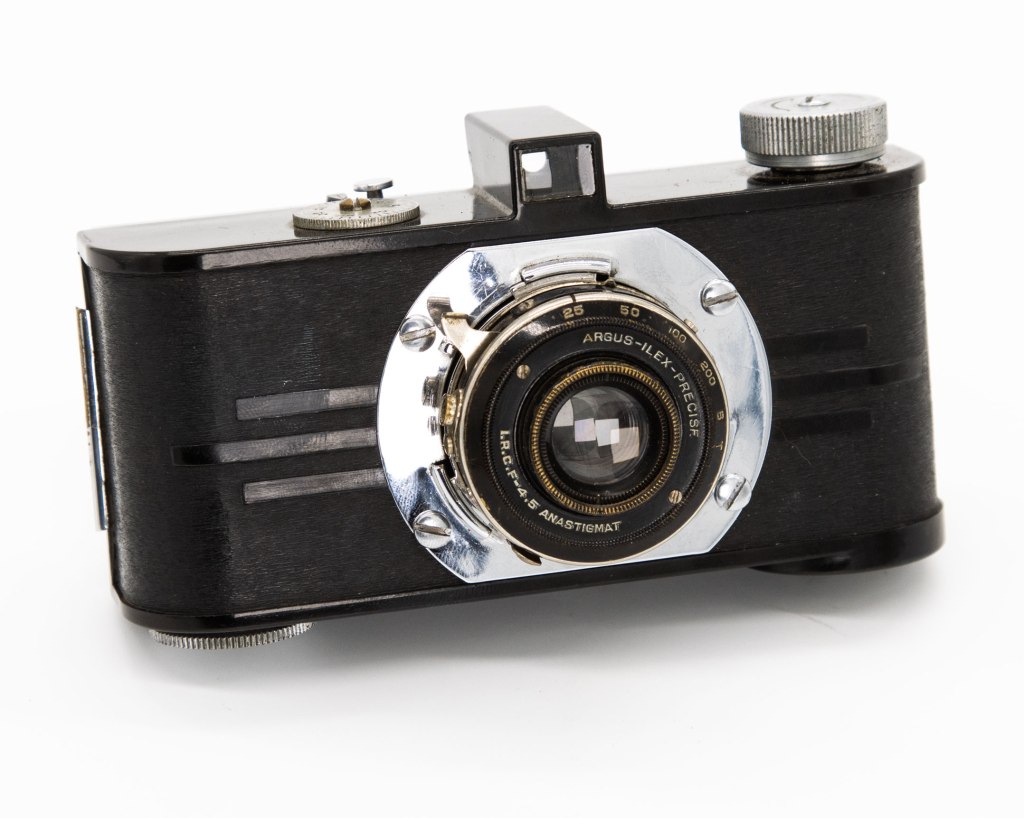

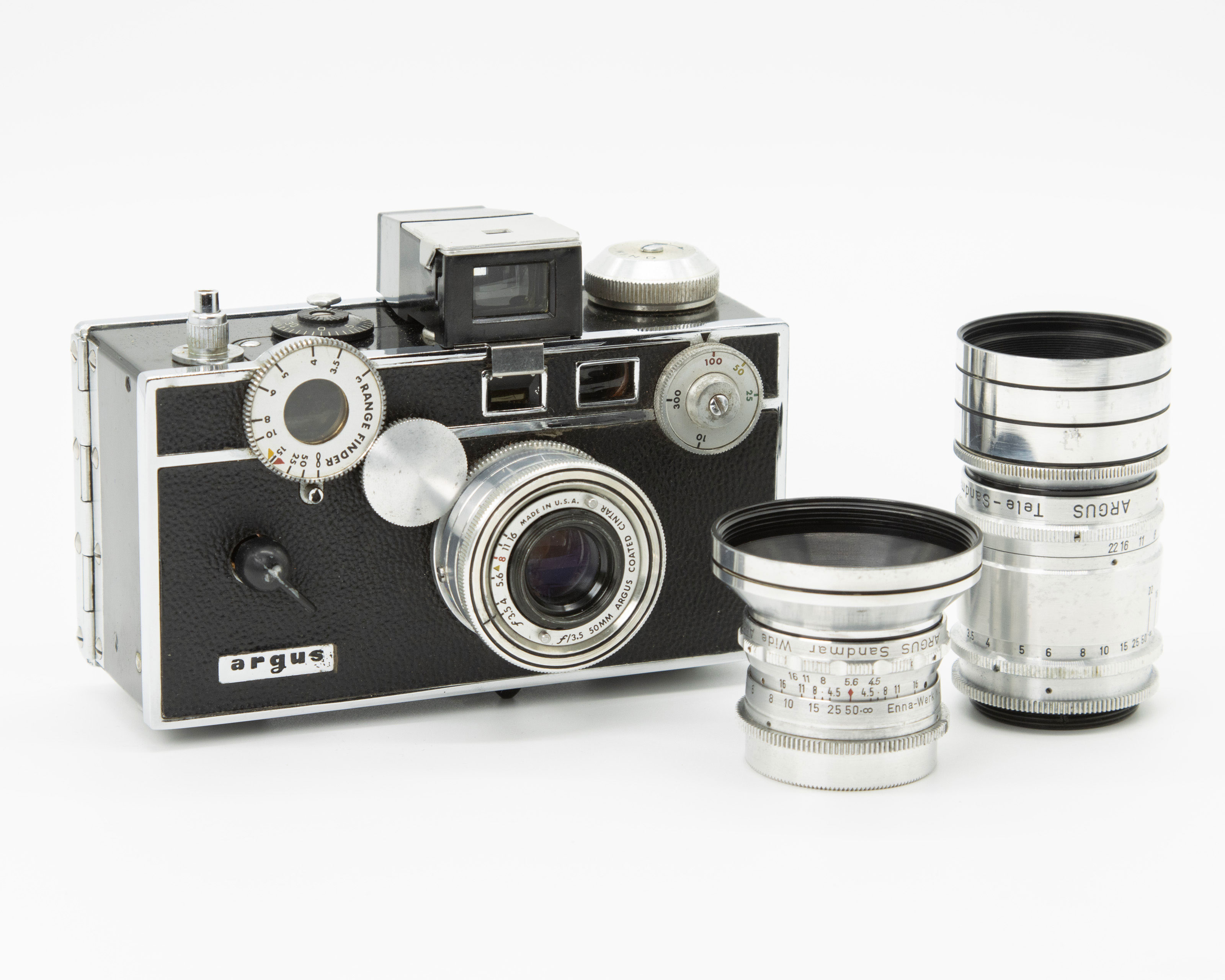
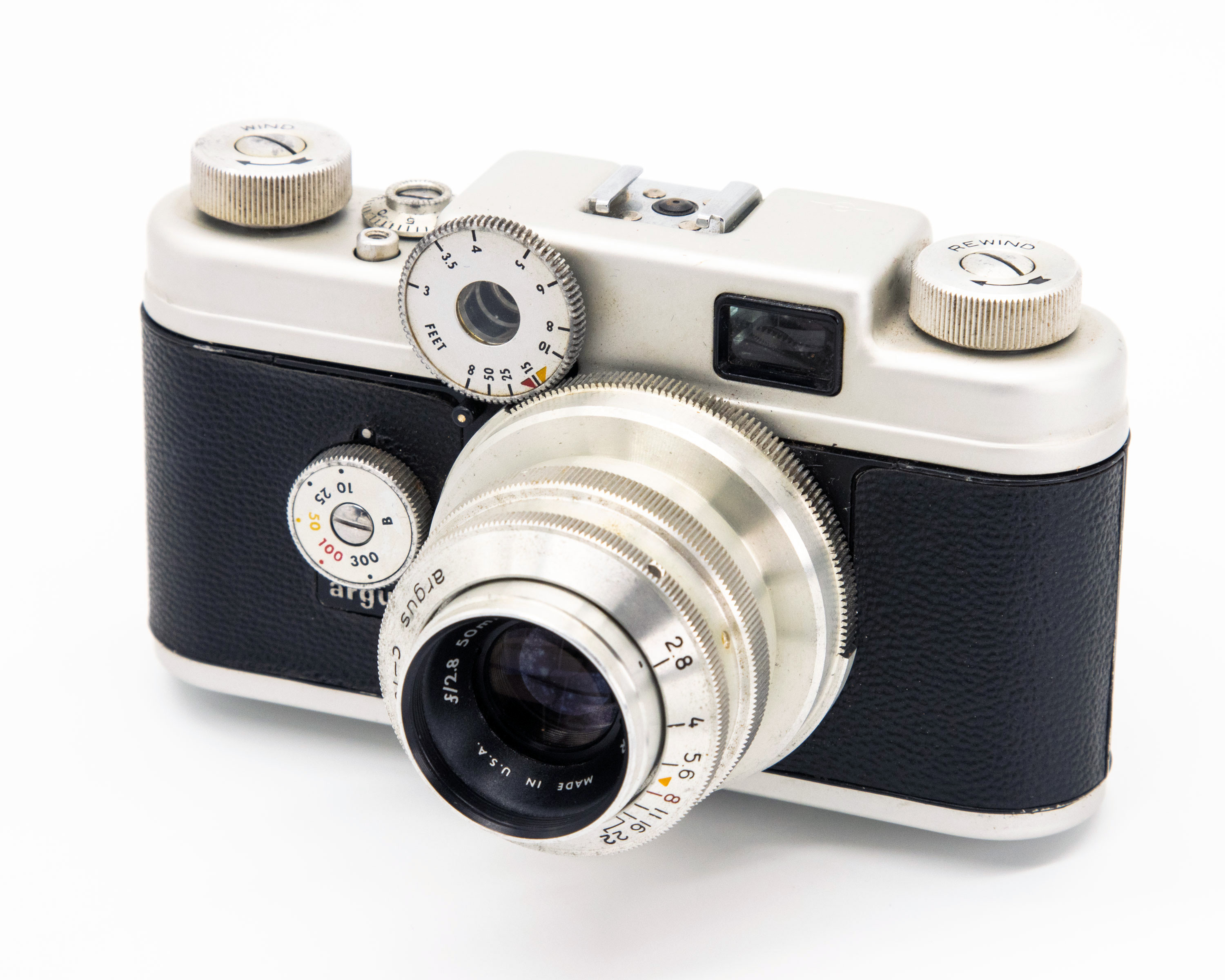

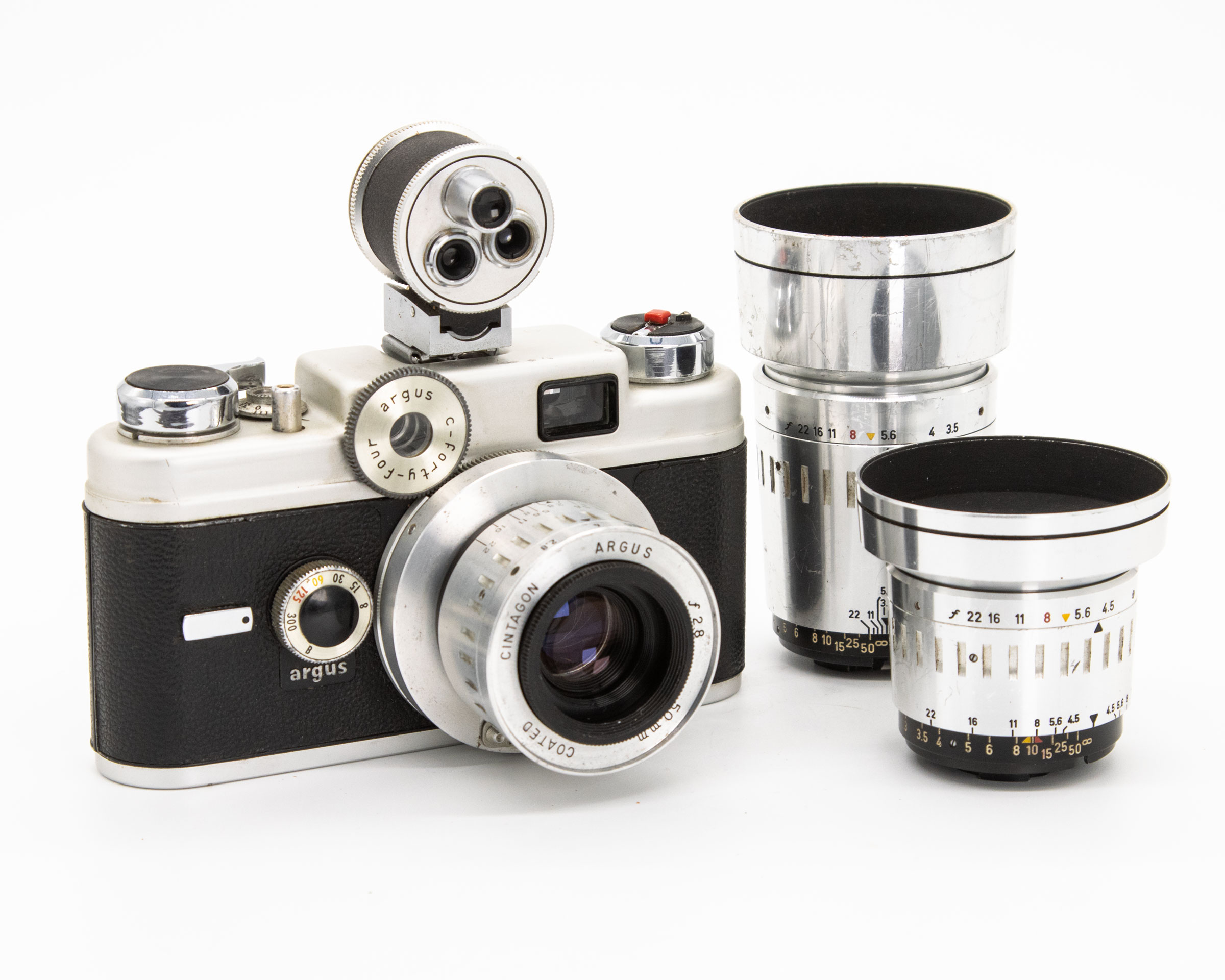
w/35mm, 100mm, and turret viewfinder

All text and photographs on this website (other than found-photography and otherwise noted) are © 2014-2021 Steven Broome. All rights reserved.
 Vintage Camera Digest