
I guess you could call this “photographic archaeology”. It’s the thrill of bringing to light something previously hidden from existence – something that no one has seen before. Yes, they are only photographs. But these photographs are documents of a vernacular history. What strange twist of fate occurs that leaves a roll of film undeveloped and forgotten for half a century is anyone’s guess. But I’m thankful for that glitch. Because for an hour or so, I can channel Indiana Jones without leaving the stainless-steel comfort of the kitchen sink.

But, alas, there are certain dangers, toils, and snares to overcome even in this mundane environment. Can the film be processed by current methods and chemistry? Many films of the mid-20th Century can not. Kodacolor C-22 Process? Ektachrome EK-4 Process? Our beloved Kodachrome’s K-14 Process? Sadly, no. At least not as they were intended to be. No, the perfect film for this sort of adventure should be processed by traditional Black & White methods. And a roll of Verichrome Pan is the perfect candidate. Hurdle number one: cleared.
But what size? Is it 35mm? 16mm? 127? 110? 126? 818? 616? 120?
Luckily, the size is 620 – an obsolete, but still manageable film size due to it being indistinguishable from 120-size apart from the spool it is wound on. Many of the other sizes would leave me at an early dead-end. But my trusty Paterson developing tank and reels will easily accommodate 35mm, 127, and 120. Second hurdle cleared.
But the next crucial step is one where I could easily falter since it requires a degree of patience: getting the film on the developing reel. Anyone reading this who has ever taken a basic darkroom course is now nodding in agreement. This step must be done in complete darkness. And since I’m without a home darkroom, a changing bag must suffice. It does the job – marginally. But the twist here is that the film is nearly 60-years old. And it has been wound tightly on it’s skinny spool for six decades. This film will fight me all the way.
This is where the perspiration begins. Arms in the changing bag up to my elbows, I try again and again to load the permanently curled film onto the reel without cross-threading or causing a hard crease. All I need is to get it in past the ball-bearings – then slowly ratchet the rest on to the reel. Several tries and 15-minutes later, hurdle number three – conquered (twice).
Once on the reels and into the tank, the remaining process should be standard procedure. But I kid myself. For I know that one of the most common afflictions of old, way-outdated film is “fogging”. And if there are any images on these rolls, they could already be irreparably damaged. But I also know that processing in extra-cold developer (60-degrees) is the best way to keep the effects of fogging to a minimum. And here we meet hurdle number four.
Because it is August in the state of Georgia. Which means it is 95-degrees every day. Black and white chemistry is meant to be used at room-temperature. And that is usually fine and dandy since I have development tables that cover temperatures from 65-75 degrees. Today the room-temperature of the chemicals is a balmy 72-degrees. I need 60. And I have a plan. I’ll mix the stock solution of developer 1:1 with cold water from the tap.
But the hurdle just got taller. Even the coldest water from the tap today is still too warm at 68-degrees. Adding that to the developer might get the working solution to 70 – still too warm. Time to open the freezer and bring in the ice. Chilling the water to 60-degrees (my patience ran out), I combined it in equal amounts with the developer. The result? 64-degrees. It will have to do. Hurdle number four trips me up, but I’m still going.
The next task is to establish a development time for 64-degree developer with Verichrome Pan film. Unfortunately, this is colder than the published development tables go. I’ll have to extrapolate a new time based on the published times and keep my fingers crossed that the temperature/time relationship is linear. I like how that sentence makes me sound smart. I should find a way to use that at the office this week.
With the development time established the processing can begin. Agitation for the first 30-seconds, then five inversions every 30-seconds for 11 minutes. Nothing out of the ordinary here…except that when I reach one minute to go, a voice in my head asks, “what if the film is slow to respond since it’s so old?” If so, it will need additional development. So, on an impulse I add TWO whole minutes to the development time. What the heck? I started this so methodical and deliberate, only to arbitrarily add another 20% to the time at the end? Yep. That’s how I roll.
After the development and fixing is complete, I ignore the urge to take a peek at the film prior to the final wash. I figure I’ve done this much work, might as well wait another 10 minutes to get the final verdict. And now I finally contemplate that last major hurdle – what if there are NO images on the film? Well, that’s as likely as anything else. But therein lies the adventure. What latent images from the past will all of this reveal?
Well, for these two rolls, all of the trouble was worth it. I ended up with eight, relatively fog-free exposures on each roll. That means that the camera used to shoot the film shot in the 6x9cm format – like an old Kodak folding camera, or perhaps a Voigtlander Bessa, or Zeiss Ikonta. I’ll never know. But the photos that camera produced are pretty doggone good. See for yourself.
The last photos contain images of cars with the license plate visible. Under high magnification I can see that one of them reads “North Carolina” and the year “58”. And since the seller of these two rolls was also located in North Carolina, I’m making an assumption that this was indeed the location. I could be wrong. And although the film does exhibit evidence of mold/mildew growth in the emulsion, the images are relatively clean and clear – some of the best I’ve ever been able to salvage. Enjoy!


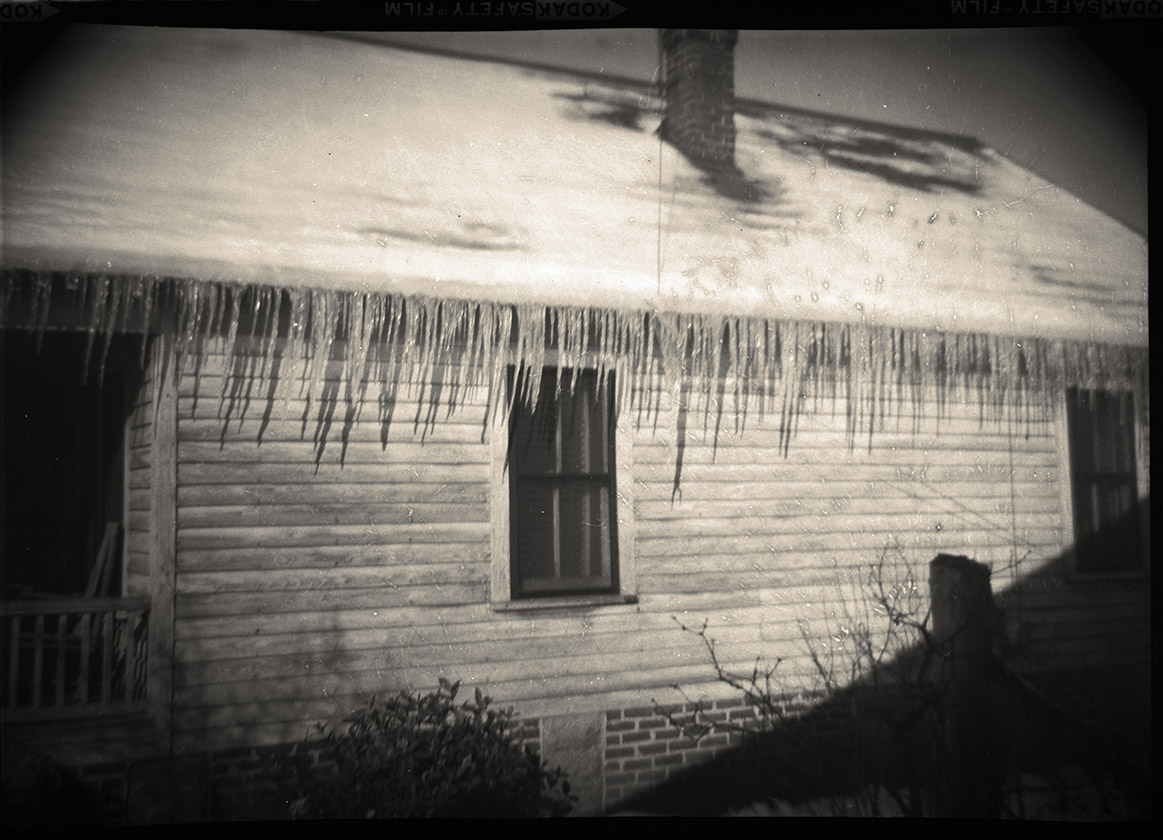


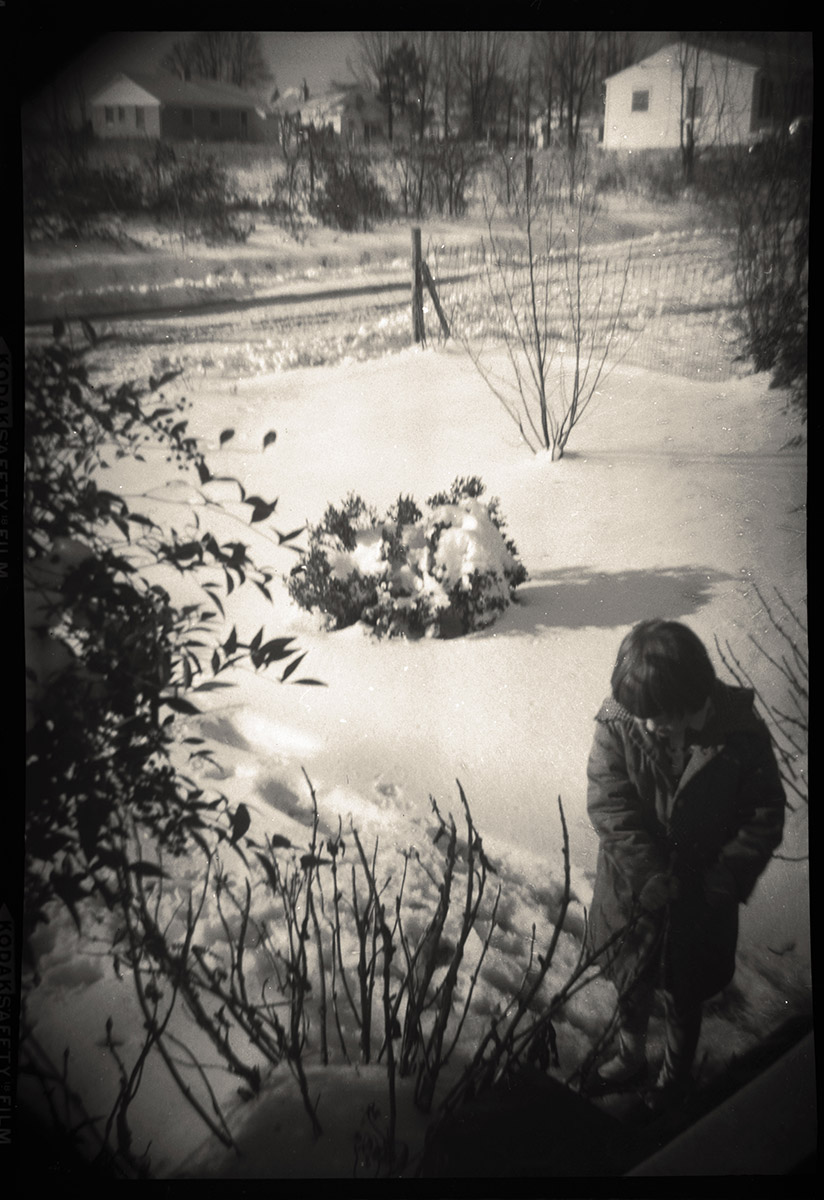

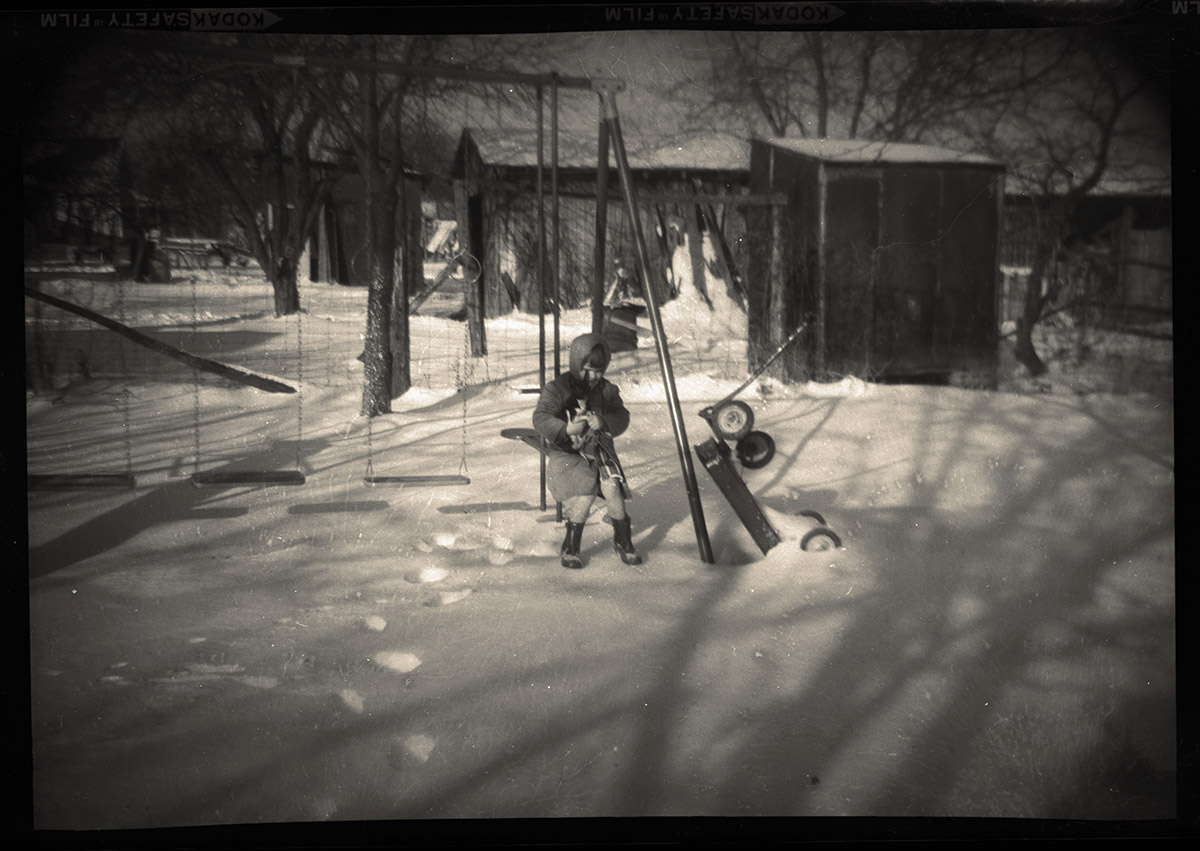

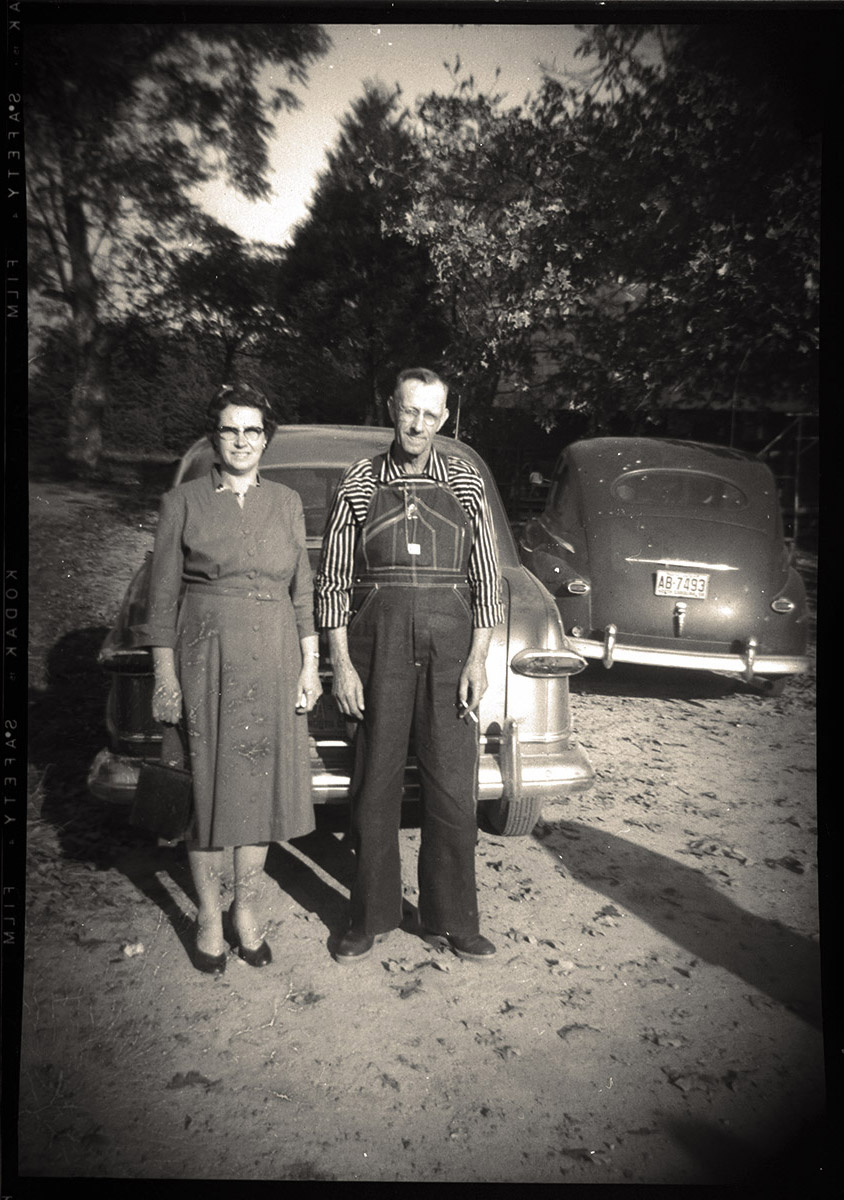


- All dressed up in North Carolina, 1958.


All text and photographs on this website (other than found-photography and otherwise noted) are © 2014-2021 Steven Broome. All rights reserved.

 Vintage Camera Digest
Wow – these photos are Awesome! Very nice description of the processing required. It’s amazing how a few photos can really tell a story. Thanks for sharing!
LikeLike
Brilliant.
LikeLike